




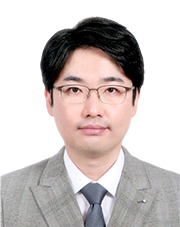
Interview with a professor who won the 2025 Doosan Yonkang Environment Research Fund
Cho Kang woo, Professor, Department of Environmental Science and Engineering, Pohang University of Science and Technology
Once again, congratulations on being selected as the winner of the 'Doosan Yonkang Environment Research Fund.'
It is a great honor to receive the 2025 Doosan Yonkang Environment Research Award (Excellence Prize), which recognizes my decade-long efforts in environmental research since completing Ph.D. in 2015. I would like to express my sincere gratitude to Professor Ji Hyang Kwon and Director Seok Won Hong for their kind recommendation, as well as to all members of the Korean society of environmental engineers. This award truly belongs to my students and colleagues, including Dr. Seokhwa Hong, the first author of the awarded paper, and all former and current members in Postech lab on Chemical REdox Acceleration TEchnology for Water Quality (CREATE WQ). I will continue to devote myself to advancing the field of environmental engineering.
Among the many fields of engineering, I would like to hear the reason why you chose "Environment" as your major.
While studying at Seoul National University, I became fascinated by the essential role of water in our lives and the engineering efforts required to manage it. Inspired by my M.S. advisor, Professor Tae-Hak Chung, I aspired to follow in his footsteps as a decent scholar. During my Ph.D. at Caltech under Professor Michael R. Hoffmann, I learned that environmental engineering extends beyond water purification; It is a discipline that explores the circulation of resources and energy. This perspective led me to focus on environmental electrochemistry. Moreover, meeting my life partner, who is also an environmental engineer, made my choice of major all the more meaningful.
It would be grateful if you are able to explain the field you are working on, and the importance of the research.
My research focuses on electrocatalysts and processes that accelerate the ‘wastewater refinery’ defined as conversion of wastewater into reusable water, energy, and valuable resources. In essence, CREATE WQ integrates electrochemical principles (that commonly applied in water electrolysis, fuel cell, capacitor, battery and solar cell) into environmental engineering. In wastewater electrolysis cell, for example, the anode generates reactive oxidants instead of O2, thereby purifying water while simultaneously converting renewable electricity into energy carriers such as H2. Conventional water treatment technologies have focused on oxidizing organic pollutants into CO2. However, in the era of carbon neutrality, the focus has shifted toward reducing CO2 back into organic compounds through energy technologies. The foundation of the water–energy–resource nexus lies in transforming elemental species (C, H, O, and mores) into desired compounds. Environmental electrochemistry is uniquely suited for this, as it enables direct control and acceleration of redox reactions at the molecular level. By coupling water purification with energy conversion, wastewater electrolysis cell offers a key platform for realizing the water–energy–resource nexus.
Could you please provide an explanation of the award-winning research paper?
The awarded paper reports a heterojunction anode composed of nanoporous TiO2 coupled with Ir-doped (5 at%) spinel NiFe2O4, designed to selectively oxidize chloride ions into reactive chlorine species in a membraneless wastewater electrolysis cell. The anode can be easily fabricated by a simple thermal decomposition of aqueous precursors, facilitating a scale-up. It operates stably under circum-neutral pHs, even in real toilet wastewater. The charge-deficient TiO2 layer surface suppresses oxygen evolution and enables nearly 100% selectivity for reactive chlorine formation. Consequently, it achieves remarkable removal of organics and ammonium while improving hydrogen generation efficiency at the cathode by suppressing oxygen evolution. This work establishes a scalable electrode design strategy that achieves high activity, selectivity, and stability while minimizing precious metal usage. Furthermore, a pilot-scale demonstration confirmed its potential for simultaneous decentralized wastewater treatment and clean H2 production.
I would like to inquire about your plans as a professor and researcher.
As a professor in the Postech division of environmental science and engineering, my foremost mission is to nurture future leaders who will advance next-generation environmental technologies. In parallel with wastewater electrolysis cell, CREAETE WQ is pursuing wastewater fuel cells that utilize waste energy carriers such as urea, capacitive deionization and electrodialysis for recovering valuable resources (lithium and ammonia), and photoelectrochemical systems for water reuse. Through these efforts, I aim to establish a global leading research group in environmental electrochemistry that transforms environmental remediation technologies into platforms for value creation.
Lastly, could you please share a few words of encouragement or advice for your fellow researchers who are applying for the 'Doosan Yonkang Environment Research Fund'?
The international competitiveness of Korean society of environmental engineers stems from the dedication and excellence of numerous outstanding young researchers. I hope that many of my colleagues will take interest in and apply for the Doosan Yonkang Environmental Research Award to further strengthen our field and its global visibility.