




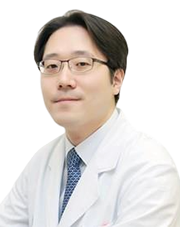
Interview with a professor who won the 2025 Doosan Yonkang Academic Awards - Surgeon's division
Lee In Seob, Professor, Department of surgery, college of medicine, University of Ulsan, Asan Medical Center
Once again, congratulations on being selected as the winner of the ‘Doosan Yonkang Academic Awards - Surgeon’s division’.
I am deeply honored and sincerely grateful to be selected as the recipient of the 19th Doosan Yonkang Surgical Award. I believe this recognition is the result of collective efforts of my esteemed mentors and colleagues who have dedicated themselves to improving gastric cancer treatment and patient quality of life. I will continue to strive to provide safer and more precise surgical care for gastric cancer patients and to contribute to the advancement of surgery through internationally recognized research.
Among the many fields of medicine, I would like to hear the reason why you chose “surgery” as your major.
I was drawn to surgery because it allows us to directly save lives and provide patients with new hope in an immediate way. In particular, gastric cancer is a highly significant health issue in Korea, and gastric cancer surgery is not simply about removing a tumor – it requires a comprehensive approach that also safeguards the patient’s quality of life. This combination of technical challenge and responsibility is what inspired me to choose this field.
It would be grateful if you are able to explain the field you are working on, and the importance of the research.
Currently, I am focusing on two major research areas. First, I am conducting a randomized clinical trial to evaluate the clinical benefits of Helicobacter pylori eradication therapy after gastric cancer surgery. This study aims to determine whether eradication therapy remains effective in reducing recurrence and improving outcomes in the altered gastric environment following surgery. Second, I am developing an artificial intelligence model to support personalized treatment decisions for elderly patients with gastric cancer. In an aging society with increasing comorbidities, our goal is to quantitatively predict life expectancy and treatment-related risks, enabling more evidence-based and individualized treatment strategies in clinical practice.
Could you please provide an explanation of the award-winning research paper?
This study was conducted using nationwide survey data from the Korean Gastric Cancer Association to establish a clear age threshold for early-onset gastric cancer. Our analysis identified 50 years or younger as an appropriate definition, as patients in this age group demonstrated distinct characteristics in terms of sex distribution and tumor biology compared to older patients. This work helps clarify the previously ambiguous criteria for early-onset gastric cancer and provides a consistent standard for future clinical practice and research.
I would like to inquire about your plans as a researcher and surgeon.
I will continue to prioritize patient safety and quality of life while advancing precise and effective surgical treatment for gastric cancer. I aim to further develop AI-based personalized care to support better treatment decisions, especially for elderly patients. With humility, I will keep contributing to the field and growing with future generations of surgeons.
Lastly, could you please share a few words of encouragement or advice for your fellow surgeons who are applying for the ‘Doosan Yonkang Academic Awards - Surgeon’s division’?
The dedication and hard work of every surgeon caring for patients on the front lines are what make this award truly meaningful. I sincerely applaud your passion, and I hope we continue to grow together as we advance the field of surgery.