




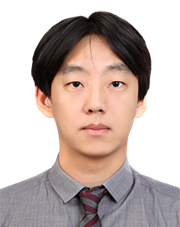
Interview with a professor who won the 2025 Doosan Yonkang Academic Awards - Surgeon's division
Lee Jeong Moo, Clinical Associate Professor, Department of Surgery, Ewha Womans University Seoul Hospital
Once again, congratulations on being selected as the winner of the ‘Doosan Yonkang Academic Awards - Surgeon’s division’.
I am deeply honored and grateful to be selected as the recipient of the 19th Doosan Yonkang Surgical Academic Award. The K-QIPS (Korean Quality Improvement Platform in Surgery) program represents a nationwide effort to enhance surgical quality and patient safety across Korea. I am pleased that this meaningful research has been recognized. Beyond data collection, this project aims to establish a foundation for standardization and qualitative improvement in surgical care in Korea. I share this honor with the many talented individuals whose contributions made this work possible. I extend my sincere gratitude to all co-investigators, surgeons nationwide who participated in data collection, and my colleagues at the Department of Surgery, Ewha Womans University Medical Center. Special thanks go to our senior faculty members who provided invaluable guidance and encouragement throughout the development of the K-QIPS program. This recognition inspires me to continue pursuing excellence in patient safety and surgical quality research, as we work together to elevate the field of surgery in Korea. My sincere thanks go to the Korean Surgical Society and the Doosan Yonkang Foundation for this meaningful recognition.
Among the many fields of medicine, I would like to hear the reason why you chose “surgery” as your major.
My path to surgery began when a family member underwent liver transplantation during my childhood. I remember the uncertainty we faced and the fear of losing someone we loved. Watching their recovery after surgery made me realize that surgeons don't just treat diseases, they give people their lives back. Liver transplantation represents the last hope for many patients with end-stage liver disease. Experiencing this firsthand inspired me to pursue surgery, and eventually led me to specialize in liver transplantation
It would be grateful if you are able to explain the field you are working on, and the importance of the research.
My research currently focuses on clinical liver transplantation studies alongside AI-driven healthcare technologies. In liver transplantation, I'm investigating the relationship between graft rejection and post-transplant malignancy to improve long-term survival. Simultaneously, I'm developing AI-based surgical video analysis systems and clinical decision support systems powered by large language models. These technologies enable objective evaluation of surgical training and reduce clinician workload while Improving patient safety. The ultimate goal is to make surgical care safer and more effective.
Could you please provide an explanation of the award-winning research paper?
The research presents the development of K-QIPS, Korea's first nationwide platform for surgical quality improvement. Despite Korea's world-class cancer survival rates, we lacked a comprehensive national system for managing postoperative complications. Under the leadership of the Korean Surgical Society, we launched K-QIPS with 87 hospitals participating nationwide. The platform encompasses five major surgical areas; gastric surgery, colorectal surgery, hepatectomy and liver transplantation, pancreatectomy, and kidney transplantation, systematically collecting surgical data and employing AI to predict complications. K-QIPS extends beyond data collection alone. It provides evidence-based feedback to participating hospitals, enabling tangible improvements in care quality. Our goal is to reduce surgical complications and mortality, ultimately advancing public health. This work establishes a national infrastructure for surgical quality management and has the potential to serve as a benchmark for other countries.
I would like to inquire about your plans as a researcher and surgeon.
My current research focuses on post-transplant immune management and complication prevention, with the objective of generating clinically meaningful outcomes that directly improve patient care. I am committed to exploring diverse research domains and systematically addressing real-world clinical challenges through the application of emerging technologies including artificial intelligence, resident education platforms, and healthcare workflow automation. Furthermore, I am dedicated to the continued development of national healthcare quality improvement initiatives such as K-QIPS, with the aim of advancing the standard of surgical care throughout Korea. My ultimate goal is to evolve as both a clinician and researcher who integrates clinical expertise with scientific innovation to deliver safer and more effective patient care.
Lastly, could you please share a few words of encouragement or advice for your fellow surgeons who are applying for the ‘Doosan Yonkang Academic Awards - Surgeon’s division’?
Research is challenging when managing a demanding clinical practice. Balancing patient care with research requires substantial time and commitment. However, remember that our research ultimately benefits our patients and advances the field of surgery in Korea. I recommend starting with meaningful questions rather than striving for perfect research. The most impactful research often stems from real clinical problems and challenges that need solutions for our patients. I also encourage you not to work in isolation. Collaborating with colleagues across different disciplines can create valuable new opportunities. This award recognizes your dedication and can provide momentum for advancing your research. I encourage you to apply with confidence.