




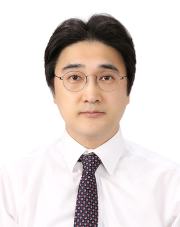
Interview with a professor who won the 2025 Doosan Yonkang Academic Awards – Hepato-biliary-Pancreatic Surgeon’s Division
Park Jeong Ik, Ulsan University Hospital, University of Ulsan College of Medicine
Q. Once again, congratulations on being selected as the winner of the ‘Doosan Yonkang Academic Awards – Hepato-Biliary-Pancreatic Surgeon’s Division’.
A. I am deeply honored and gratified that my dedication to patient care over the past 20 years has been recognized through this academic achievement. This award is not a personal success, but rather the outcome of our team's combined effort. I accept this award with a grateful heart. It encourages me to keep pushing our work forward.
Q. Among the many fields of medicine, I would like to hear the reason why you chose “Hepato-biliary-Pancreatic Surgery” as your major.
A. Just like the saying, 'Difficult roads often lead to beautiful destinations,' I was drawn to the HBP field because of its challenging nature and complex anatomy. The deep focus and thrill I feel while performing precise surgery near delicate organs and blood vessels still fuel my passion for this work. Although this path eventually led to cervical HIVD, I take great pride in having chosen this field as a surgeon.
Q. It would be grateful if you are able to explain the field you are working on, and the importance of the research.
A. I am focusing on standardizing minimally invasive surgery using robotic systems. Beyond just perfect removal, the current priority is to minimize scarring while reducing pain and accelerating recovery for the patient. Additionally, ergonomic robotic systems offer practical assistance by decreasing surgeon fatigue, which enables more precise and longer surgeries.
Q. Could you please provide an explanation of the award-winning research paper?
A. This study compared the clinical outcomes of single-incision laparoscopic cholecystectomy (SILC) and robotic systems using da Vinci Xi and SP. The results showed that while the total operation time for the SP system was slightly longer than for SILC, it significantly shortened the console time, which is the most critical part of the surgery. Additionally, it proved that the precise joint functions prevent instruments from colliding in narrow spaces, making the surgery safer and more convenient.
Q. I would like to inquire about your plans as a researcher and surgeon.
A. I plan to keep researching ways to overcome the technical limits of robotic surgery and prove its clinical value. As an experienced surgeon who provides safe and precise care, I will do my best to make sure advanced technology brings real benefits, like reducing pain for my patients
Q. Lastly, could you please share a few words of encouragement or advice for your fellow surgeons who are applying for the Doosan Yonkang Academic Awards – Hepato-biliary-Pancreatic Surgeon’s Division.
A. I am standing here only because of the great advice from my colleagues and mentors. Just as the teaching goes, 'A research paper is a reflection of the concerns inside the operating room,' the patient data we face every day is the seed for medical progress. Even if you do not see immediate results, I encourage you to maintain the habit of objectively recording and analyzing your own surgical techniques. A simple question like, 'Is there a safer way to perform this surgery?' will eventually lead you to this place.