




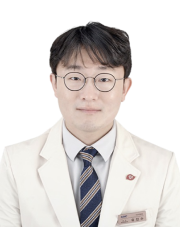
Interview with a professor who won the 2025 Doosan Yonkang Academic Awards – Hepato-biliary-Pancreatic Surgeon’s Division
Rhu Jin Soo, Sungkyunkwan University, Samsung Medical Center
Q. Once again, congratulations on being selected as the winner of the ‘Doosan Yonkang Academic Awards – Hepato-biliary-Pancreatic Surgeon’s Division’.
A. It is a profound honor to receive the Doosan Yonkang Academic Award, a recognition of great prestige in our field. I believe this award is not just a personal achievement, but a testament to the collective dedication of my colleagues in the Liver Transplantation Team at Samsung Medical Center, who constantly strive for the safest surgical outcomes for our patients. It is especially meaningful that our efforts to solve clinical challenges in the operating room through technical innovation have been recognized. I will continue to dedicate myself to the advancement of HBP surgery and the improvement of patient survival rates.
Q. Among the many fields of medicine, I would like to hear the reason why you chose “Hepato-biliary-Pancreatic Surgery” as your major.
A. HBP surgery is a highly demanding field that requires precise judgment and advanced surgical skills due to the extreme complexity of the anatomical structures involved. I have always viewed liver transplantation as the pinnacle of medical practice—the act of passing the gift of life from one person to another. The immense pressure of safely implanting a donor's graft into a recipient's abdominal cavity, followed by the unparalleled reward of seeing that patient recover, is what defines my vocation. My passion for developing safer surgical techniques to improve patient prognosis is what continues to drive me on this path.
Q. It would be grateful if you are able to explain the field you are working on, and the importance of the research.
A. My research focuses on developing 'Customized Surgical Planning Solutions' that integrate AI and 3D modeling technologies. For complex procedures like liver transplantation or resections for liver cancer, 3D visualization of a patient-specific model is crucial for ensuring safety and efficacy. Recognizing that many colleagues face barriers in adopting these advanced tools, my team is working to combine AI and mobile technology to make these solutions more accessible. Our ultimate goal is to ensure that every patient—not just in Korea, but globally—can benefit from these high-tech surgical guides through my company, Liveraiz.
Q. Could you please provide an explanation of the award-winning research paper?
A. The award-winning study demonstrates how 3D-printed intra-abdominal cavity replicas can prevent 'Large-for-Size Syndrome' (LFSS) during liver transplantation. By comparing a 3D-printed group to a control group between 2020 and 2022, we proved that using these models leads to significantly superior graft survival. This technology allows surgeons to intuitively simulate the spatial fit of a graft preoperatively or even at the donor's site, preventing fatal graft compression that 2D imaging alone cannot fully predict. Furthermore, our protocol is highly practical due to its low production cost and fast manufacturing time, which we have recently reduced to approximately 6 to 7 hours.
Q. I would like to inquire about your plans as a researcher and surgeon.
A. As a surgeon at Samsung Medical Center, I will continue to focus on providing life-saving care to patients undergoing liver transplantation and liver cancer surgery. As a professor and researcher, I plan to stay committed to developing innovative surgical methods and treatments. Furthermore, as the CEO of Liveraiz, I intend to lead the way in ensuring our products and services provide practical help to fellow surgeons and their patients. While our current 3D-printed products are undergoing refinement for New Medical Technology approval, I am dedicated to continuously improving these technologies until they become a global standard in surgical safety.
Q. Lastly, could you please share a few words of encouragement or advice for your fellow surgeons who are applying for the Doosan Yonkang Academic Awards – Hepato-biliary-Pancreatic Surgeon’s Division.
A. The countless challenges and trials we face in the operating room are the most valuable seeds for research. My own journey into 3D modeling began with a simple desire to overcome the frustrations I felt during difficult surgeries. I encourage my fellow surgeons to never overlook the small questions that arise in clinical practice. If you investigate those questions with persistence, you will find that you can save more lives while achieving great academic milestones. Let us continue to work together for a brighter future in our field.