




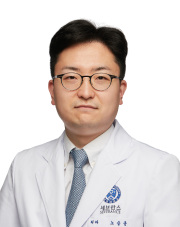
Interview with a professor who won the 2025 Doosan Yonkang Academic Awards – Hepato-biliary-Pancreatic Surgeon’s Division
Rho Seoung Yoon, Yonsei University College of Medicine, Yongin Severance Hospital
Q. Once again, congratulations on being selected as the winner of the ‘Doosan Yonkang Academic Awards – Hepato-biliary-Pancreatic Surgeon’s Division’.
A. First of all, it is a great honor to be selected as the grand prize winner of the 'Doosan Yonkang Academic Award.' In truth, I believe this award belongs to the members of the Clinical Practice Guideline Committee of the Korean Association of Hepato-Biliary-Pancreatic Surgery (KAHBPS) and especially to Professor Nam-Joon Yi, who served as the chairperson and led the establishment of the 'Clinical Practice Guideline for Simple Hepatic Cysts.' I would also like to express my deep gratitude to the Doosan Yonkang Foundation for their generous support in the advancement of the HBP field. This honor will motivate me to further commit myself to research that provides practical help to patients.
Q. Among the many fields of medicine, I would like to hear the reason why you chose “Hepato-biliary-Pancreatic Surgery” as your major.
A. While HBP surgery is highly complex and challenging, I was drawn to the dynamic nature of the field where a surgeon’s skill directly and decisively impacts the patient’s survival and prognosis. In particular, I felt a great sense of mission in dealing with intractable diseases such as liver and pancreatic cancer, as I could offer new hope to patients by combining precise surgical treatment with evidence-based medicine.
Q. It would be grateful if you are able to explain the field you are working on, and the importance of the research.
A. Currently, I am conducting research on identifying prognostic biomarkers for pancreatic cancer patients and establishing personalized treatment strategies through transcriptome clustering analysis of liver cancer. I am also interested in the field of 'meta-research.' I believe that integrating these efforts is significant as it can provide precise and individualized treatment options in the HBP field, where many refractory diseases exist.
Q. Could you please provide an explanation of the award-winning research paper?
A. This paper concerns the 'Clinical Practice Guideline (CPG) for Simple Hepatic Cysts'. Despite the rapid increase in the number of patients diagnosed with hepatic cysts in Korea due to the recent revitalization of medical check-ups, there has been a lack of standardized guidelines tailored to our domestic context. This study adapted and modified international guidelines to better suit domestic clinical realities by gathering input from a multidisciplinary team of Korean experts. The paper includes practical recommendations that clinicians can immediately apply in the field, such as diagnostic principles using ultrasound, criteria for selecting antibiotics in case of infection, and the lack of necessity for follow-up in asymptomatic patients. Through this, we aimed to contribute to reducing unnecessary medical expenses and improving the efficiency of patient management
Q. I would like to inquire about your plans as a researcher and surgeon.
A. Recently, I have developed an interest not only in clinical research but also in meta-research and clinical research methodology, and I am planning a research fellowship in these areas. Through this, I hope to contribute to the qualitative improvement of HBP surgery research. At the same time, as a clinician, I will strive to be an HBP surgeon who treats patients with kindness and approaches every surgery with the utmost sincerity.
Q. Lastly, could you please share a few words of encouragement or advice for your fellow surgeons who are applying for the Doosan Yonkang Academic Awards – Hepato-biliary-Pancreatic Surgeon’s Division.
A. I am well aware that balancing research with a busy clinical schedule is never easy. However, I believe that the records of research we leave behind, bit by bit, ultimately serve as a small but vital foundation for saving patients' lives. In that sense, I believe the Doosan Yonkang Academic Award is the greatest form of encouragement that recognizes the dedication of such surgeons. Thank you.